Custom T-Shirt Manufacturer: Complete Sourcing Guide for Clothing Brands
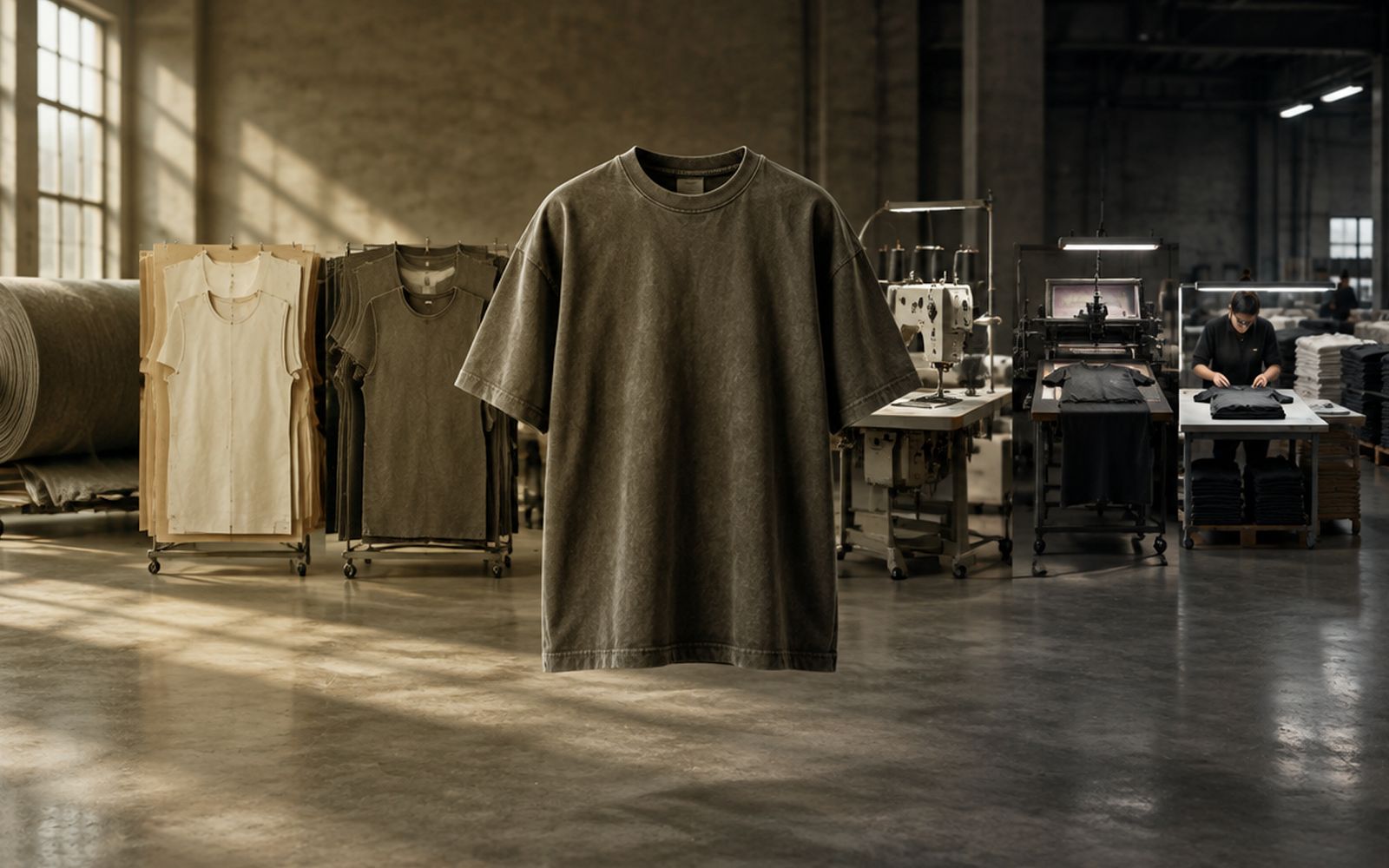
Finding the right custom t-shirt manufacturer is the single decision that shapes everything downstream: your fabric quality, your fit consistency, your turnaround time, and ultimately how your brand looks on a customer's body. This guide walks through exactly what to look for before you place your first order.
What a Custom T-Shirt Manufacturer Actually Does
A custom t-shirt manufacturer builds garments to your specifications your fabric choice, your fit, your decoration rather than selling pre-made blanks. That typically covers pattern-making, fabric sourcing, cutting, sewing, and decoration (screen printing, embroidery, or DTG) under one process, so your design goes from tech pack to finished garment through a single production partner.
Choosing the Right Fabric Weight (GSM) for Your T-Shirts
Fabric weight, measured in GSM (grams per square meter), is the first spec to nail down. Lighter fabrics in the 140–180 GSM range suit warm-weather basics and drape softly. Mid-weight fabrics around 180–220 GSM are the standard choice for most everyday t-shirt brands durable without feeling stiff. Heavyweight fabrics above 220 GSM hold structure well and are popular for streetwear and premium positioning, though they cost more per yard and suit cooler climates better.
Cotton, Polyester, and Blends: What to Choose
- 100% cotton — breathable, soft, and the most common choice for everyday tees, though it can shrink slightly and wrinkles more easily than blends.
- Cotton-polyester blends (typically 50/50 or 60/40) — more durable, wrinkle-resistant, and dimensionally stable, at a small trade-off in breathability.
- 100% polyester or performance blends — best for moisture-wicking and athletic use, less common for standard fashion tees.
MOQs and Order Volume for Custom T-Shirt Manufacturing
MOQs for custom t-shirt production commonly range from 50 to 300 units per style, depending on the manufacturer. Lower MOQs are common among manufacturers targeting startups and growing brands, while larger MOQs are typical once you're producing at scale with proven, repeatable styles.
Printing and Decoration Options
Screen printing is the most cost-efficient option at higher volumes and works well for bold, simple designs. DTG (Direct-to-Garment) suits smaller runs or highly detailed, multi-color artwork since there's no per-color setup cost. Embroidery adds a premium, tactile finish, typically used for logos rather than full-front graphics.
Questions to Ask Before You Place a Bulk Order
- Can I get a physical sample before committing to the full production run?
- What is the standard lead time for my specific order size, not just your fastest advertised turnaround?
- How is quality control handled, and what AQL standard do you inspect against?
- Do you handle shipping as FOB or DDP, and what does that change about my landed cost?
Sourcing With ZN Apparel
ZN Apparel is a US-registered custom clothing manufacturer built around a low 100-unit MOQ per style, which keeps custom t-shirt production accessible for startups and growing brands rather than only large-volume operators. Production covers cut & sew, screen printing, embroidery, labels, and packaging in-house, with a standard 2–3 week turnaround and shipping to 30+ countries under either DDP or FOB terms. Quality control follows a strict AQL 2.5 standard, and quotes are typically available within 24 hours of submitting a tech pack or design brief. Get a Free Quote Now!
Frequently Asked Questions
Q: What GSM is best for a standard custom t-shirt?
A: Most everyday t-shirt brands use 180–220 GSM fabric — heavy enough to feel substantial without being too warm for regular wear. Streetwear and premium lines often move up to 220+ GSM for a more structured drape.
Q: What is a typical MOQ for custom t-shirt manufacturing?
A: MOQs commonly range from 50 to 300 units per style. Manufacturers targeting startups, like ZN Apparel with its 100-unit minimum, tend to sit at the lower end of that range.
Q: How long does custom t-shirt production take?
A: Standard production typically takes 2–3 weeks after sample approval, though this can vary based on fabric availability, order size, and decoration complexity.
Q: Is cotton or a cotton blend better for custom t-shirts?
A: 100% cotton offers the softest, most breathable feel, while cotton-polyester blends offer better durability and wrinkle resistance. The right choice depends on your brand's positioning and the climate your customers are in.
Q: What's the difference between screen printing and DTG for t-shirts?
A: Screen printing is more cost-efficient at higher volumes and suits bold, simple designs, while DTG has little to no setup cost, making it better suited to smaller runs or highly detailed, multi-color artwork.